Your profile
Your own account: your name, your password, and the end of it. It is the one screen everybody has, on every plan, with no permission needed. A permission is granted by somebody, and there is nobody to grant a person their own name.
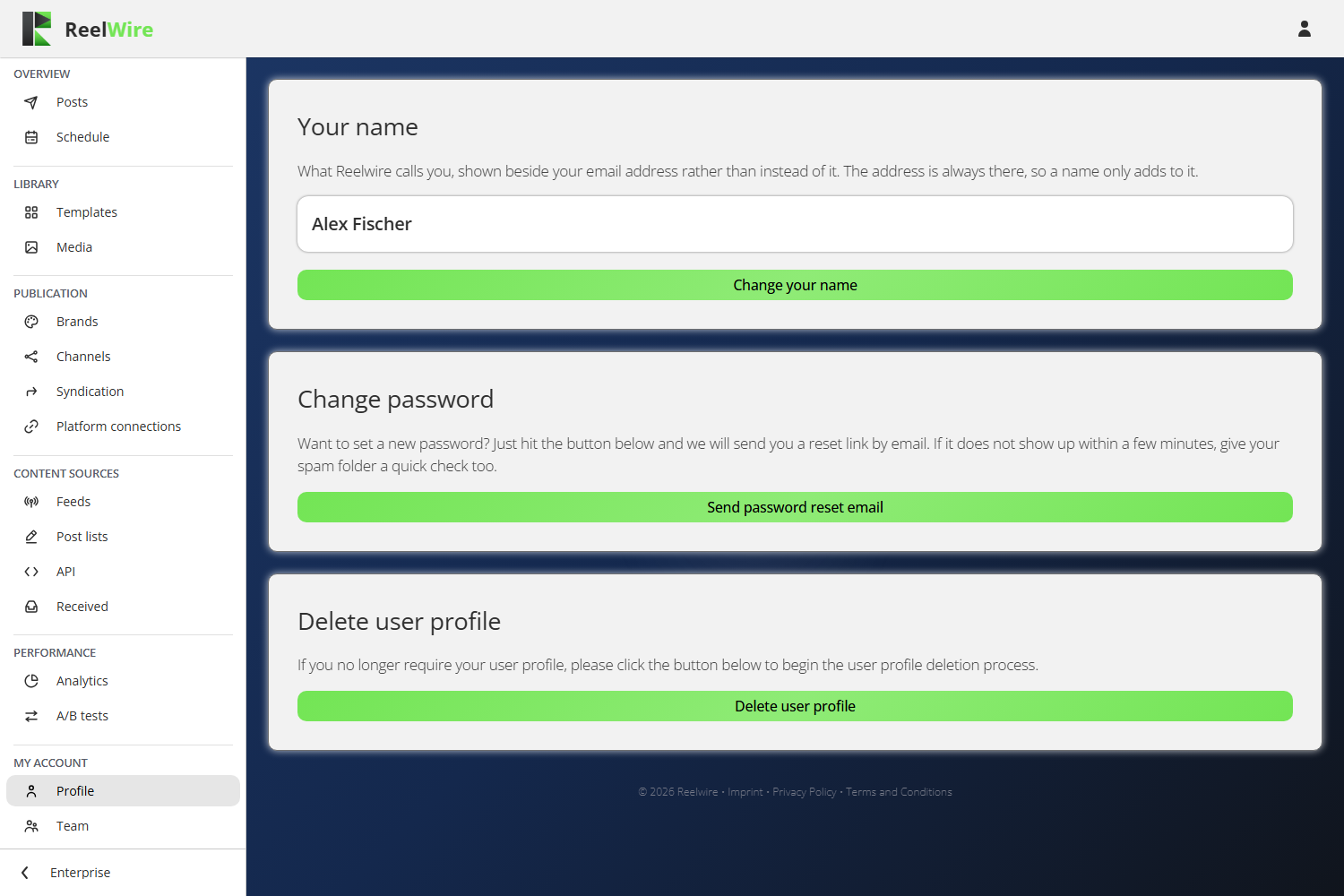
Your name
A name is shown beside your email address, never instead of it. The address is always there, so a name only adds to it, and leaving it empty is a real answer rather than a gap.
Changing your password
There is no old-password field and no new-password field. Pressing the button sends a reset link to your address, and you set the password from there.
That is deliberate: being signed in already proves the old password, and the emailed link is the safety property. A session left open on an unattended machine cannot be turned into a changed password without also reaching your mailbox.
Deleting your profile
This asks for your email address and password again, and for two separate agreements, because a session is not proof of anything worth this.
What it takes with it depends on who you are:
- An owner deleting their profile deletes the workspace. Every channel, brand, content source, credential, rendered clip and published post goes, and so does every colleague's account. Clips already posted to a platform stay where they are.
- A member's deletion takes the member. What they set up stays, because channels, brands and clips belong to the workspace rather than to a person.
A running paid plan blocks it. The form is replaced by the reason rather than sitting above a button that was never going to accept it. Move the workspace to Free on Plan first. The paid plan runs to the end of the period you have paid for, and the profile can be deleted once it stops on the charge date. A change already asked for still counts as running, because until the date arrives the workspace still holds its allowance and the change can still be called off.
Reelwire's own staff have no delete card: they are removed by Reelwire. A trial account sees the card with the reason on it, because somebody on a trial may reasonably come looking for the way out.